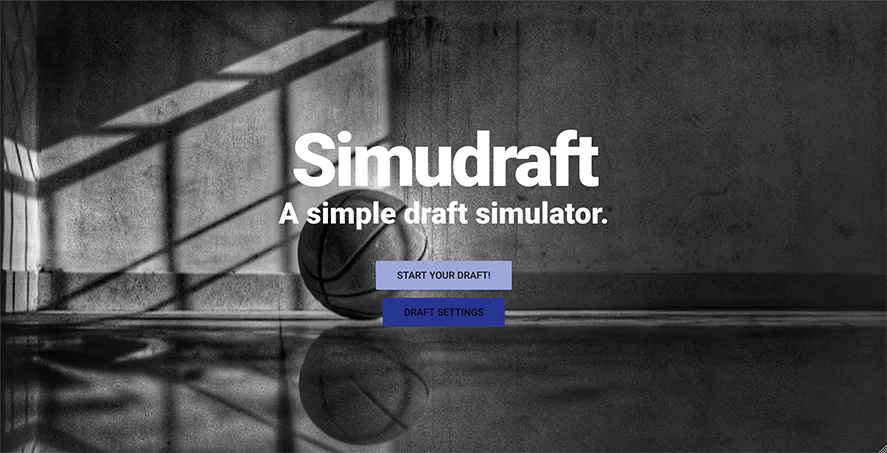
Simudraft
A web app designed to conduct mock drafts with.
The Problem
Sports fans and analysts enjoy debating draft scenarios, but there was no easy way to simulate and compare different draft strategies. Testing “what if” scenarios required manual tracking across spreadsheets or basic tools that didn’t handle the complexity of real draft logic — team needs, player rankings, and draft capital trading.
My Role
I built Simudraft as an interactive mock draft simulator. I designed the draft logic engine that enforces standard rules, created a real-time drafting interface that manages multiple users, and built the player database and ranking system that powers the simulation experience.
Tech Stack
-
React: React’s state management was crucial for handling the complex, ever-changing state of a live mock draft — tracking remaining players, team rosters, and draft order simultaneously. The ability to create responsive, interactive components made the drafting experience smooth for users.
-
Node.js: Provided the backend infrastructure for managing draft state in real-time, handling concurrent users in shared draft rooms, and serving player data and rankings efficiently.
Key Features
-
Live Draft Simulation: War-room view for real-time drafting where users take turns selecting players, configurable for different numbers of rounds to match the needs of actual sporting events.
-
Player Database: Users enter draftable players manually, creating the complete player pool for their mock draft event.
-
Team Management: Teams and coaches are set up by users, who then proceed through the draft rounds building out their rosters in real time.
-
Draft Analysis: Track draft results and view completed rosters for all participating teams.
Lessons Learned
Simudraft taught me about managing real-time state for live, interactive applications. Handling multiple users drafting simultaneously required careful state management to ensure everyone saw the same draft progress and available players at all times.
I also discovered that users running actual drafts — not just fantasy scenarios — need straightforward, reliable tools rather than complex AI-powered simulations. The war-room approach that facilitates real draft events was the right fit for this use case.